Nullam dignissim, ante scelerisque the is euismod fermentum odio sem semper the is erat, a feugiat leo urna eget eros. Duis Aenean a imperdiet risus.
Loading
Nullam dignissim, ante scelerisque the is euismod fermentum odio sem semper the is erat, a feugiat leo urna eget eros. Duis Aenean a imperdiet risus.
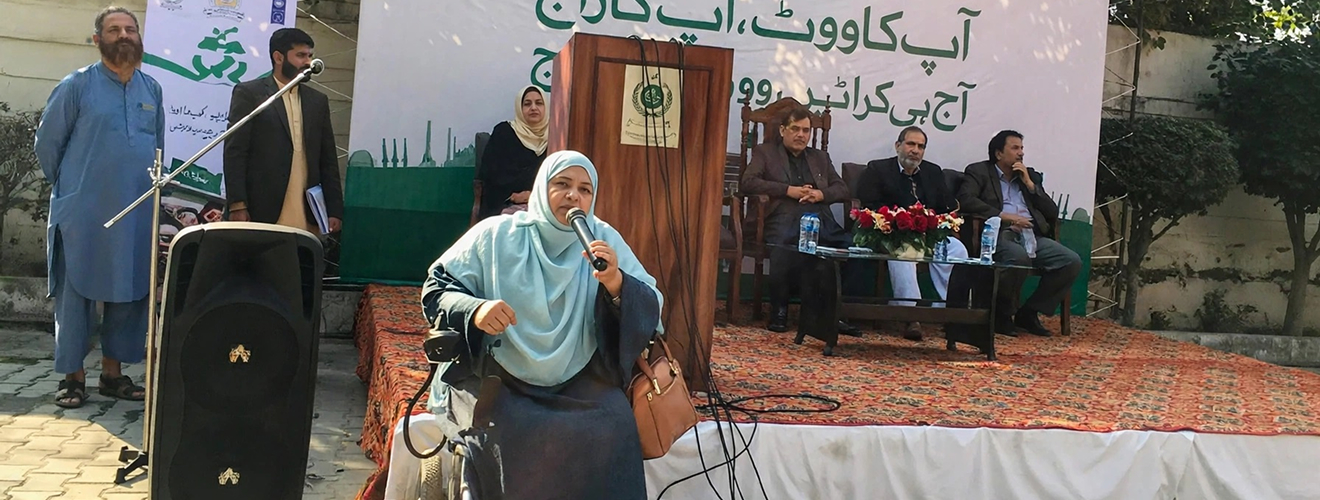
Democracy means little if it excludes the voices of 15% of the population. Yet in Pakistan, persons with disabilities remain largely absent from political decision-making—not because they lack the will or ability to participate, but because the system itself has erected barriers at every turn.
The constitutional and legal framework exists, but implementation lags. Article 25 of the Constitution of Pakistan guarantees equality before the law and equal protection of the law. The Sindh Empowerment of Persons with Disabilities Act, 2018 recognizes the rights of persons with disabilities to accommodation, adequate standards of living, ownership of property, family life, freedom of expression, and the right to take part in politics.
Pakistan has also ratified the United Nations Convention on the Rights of Persons with Disabilities (UNCRPD), which guarantees the right of persons with disabilities to participate fully and effectively in political and public life, including the right to vote, contest elections, and hold public office on an equal basis with others. The time has come to turn these commitments into lived reality.
To ensure that every person with a disability in Sindh has the right to participate fully in political and public life as a voter, candidate, elected representative, and decision-maker. We believe that political inclusion is not a privilege. It is a fundamental human right and an essential pillar of democracy.
Our mission is to break down the physical, legal, attitudinal, and procedural barriers that exclude persons with disabilities from political life and to build a truly inclusive democratic system where every voice is heard and every vote counts.
We advocate for:
Political participation must begin within political parties themselves. We advocate for the establishment of dedicated Disability Wings within major political parties to create meaningful opportunities for representation, leadership, policy engagement, and decision-making.
Every eligible person with a disability must be able to register, vote, and participate in elections independently and with dignity.
We advocate for one-window operation camps that bring together services such as disability certification, identity documentation, and voter registration, making the process simpler and more accessible.
We work closely with the Election Commission of Pakistan (ECP), which has recognized the need to ensure that voters with disabilities and older voters can participate in the electoral process. The ECP has also issued directions concerning accessibility at polling stations, including the provision of permanent or temporary ramps.
We work to ensure that these directions are effectively implemented across Sindh.
Political inclusion requires knowledge, confidence, and opportunities to participate.
The Sindh Local Government (Amendment) Act, 2021, took an important step by reserving 1% of seats in local government for persons with disabilities.
This is an important step towards recognizing persons with disabilities as political actors and decision-makers. We work to build on this progress and ensure that representation is meaningful, not merely symbolic.
Women with disabilities face multiple barriers to political participation.
We advocate for reserved seats and meaningful representation for women with disabilities in elected bodies. We support women with disabilities to contest elections, take leadership roles, and participate in political decision-making.
Our programs maintain a strong gender focus, with a commitment to at least 40% participation by women with disabilities.
Political inclusion also requires changing the way society views persons with disabilities.
Political participation does not end at the ballot box.
We believe that inclusive political representation strengthens democracy for everyone. When persons with disabilities are represented in political structures, policies, development programs, and governance frameworks become more inclusive, accessible, and equitable.