Nullam dignissim, ante scelerisque the is euismod fermentum odio sem semper the is erat, a feugiat leo urna eget eros. Duis Aenean a imperdiet risus.
Loading
Nullam dignissim, ante scelerisque the is euismod fermentum odio sem semper the is erat, a feugiat leo urna eget eros. Duis Aenean a imperdiet risus.
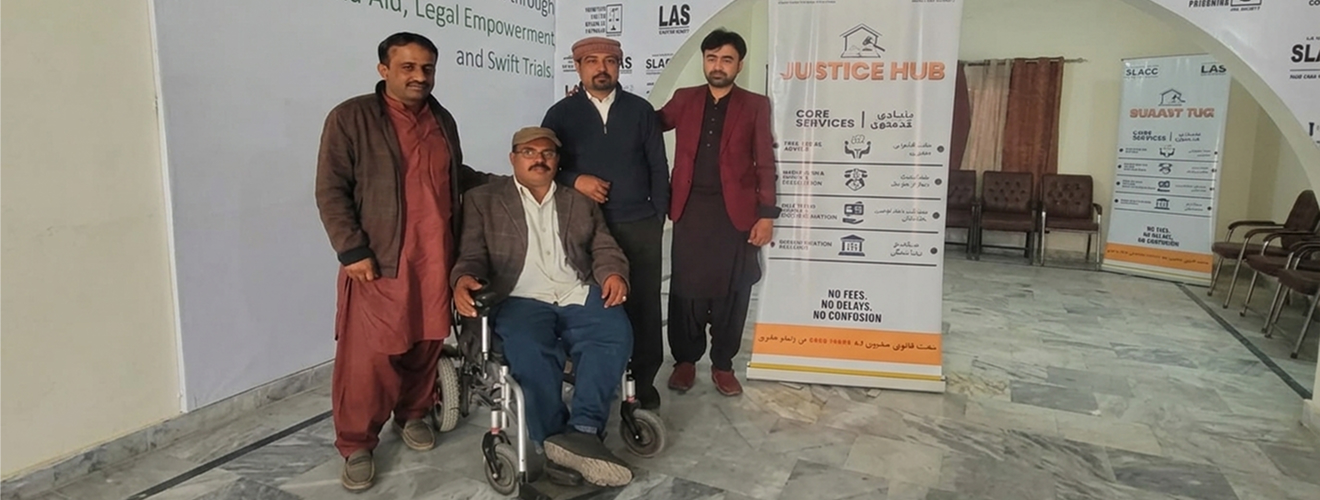
For persons with disabilities in Sindh, justice is often out of reach, not because the law does not protect them, but because the system itself remains inaccessible. Pakistan ranks 130th out of 142 countries in the World Justice Project Rule of Law Index. For persons with disabilities, this gap is even wider. Consider the reality:
Even when designated courts for persons with disabilities were notified in every district of Sindh in 2019, the justice sector continues to fail them. The law exists on paper, but implementation remains a distant dream.
To ensure that every person with a disability in Sindh has effective access to justice, not as a charity, but as a fundamental right. Employment of persons with disabilities is not an act of pity. As the High Court of Sindh has affirmed, it is “a fundamental right” grounded in constitutional values of equality and social justice. Our mission is to transform this principle into lived reality.
We work to bridge the gap between the law and the lived experience of persons with disabilities, ensuring they know their rights, can claim them, and are treated with dignity by the justice system.
We provide pro bono legal services across all 31 districts of Sindh. Our lawyers take up cases involving human rights violations, discrimination, denial of the employment quota, gender-based violence, forced marriage, and inheritance disputes. We ensure that no person with a disability is denied justice simply because they cannot afford a lawyer.
We conduct community awareness campaigns to educate persons with disabilities and their families about their legal rights under the Sindh Empowerment of Persons with Disabilities Act, 2018. We train community paralegals who can provide basic legal guidance at the grassroots level.
Many persons with disabilities lack basic identity and civil documents such as CNICs, disability certificates, or birth registrations. Without these documents, they may be unable to access government benefits, vote, or even pursue a legal case. We provide practical support to help them obtain these essential documents.
We work with the judiciary and government to make courts physically and procedurally accessible. We advocate for ramps, sign language interpreters, Braille documents, and assistive technologies in courtrooms across Sindh.
We assist persons with disabilities in filing complaints when their rights are violated, whether through denial of the 5% job quota, discrimination in education, or abuse and violence. We follow up with grievance redressal committees to ensure that complaints are investigated and resolved.
We connect persons with disabilities to digital tools that make legal information more accessible. Through platforms such as NAZ Assist, Pakistan's first multilingual legal advisory chatbot, persons with disabilities, including those who are deaf or non-speaking, can receive preliminary legal advice in English, Urdu, Sindhi, and Pashto. Users can also connect with a lawyer through the Sindh Legal Advisory Call Center Helpline (0800-70806) at no cost.
This is a landmark law, described as the first sincere and meaningful effort in Pakistan to give effect to the UN Convention on the Rights of Persons with Disabilities. It provides a comprehensive legal framework to protect the rights and dignity of persons with disabilities and ensure their full inclusion in society.
Article 25 guarantees equality before the law and equal protection of the law. The UN Convention on the Rights of Persons with Disabilities (CRPD) Articles 9 and 13 guarantee accessibility and effective access to justice. The Sindh Act is aligned with the CRPD, establishing a comprehensive rights-based framework for inclusion and protection.