Nullam dignissim, ante scelerisque the is euismod fermentum odio sem semper the is erat, a feugiat leo urna eget eros. Duis Aenean a imperdiet risus.
Loading
Nullam dignissim, ante scelerisque the is euismod fermentum odio sem semper the is erat, a feugiat leo urna eget eros. Duis Aenean a imperdiet risus.
For millions of persons with disabilities in Sindh, independence remains a distant dream. Many are confined to their homes, dependent on family members, and excluded from the life of their communities. This is not because they cannot live independently. It is because the systems and support services that should enable independent living are often missing.
The Sindh Empowerment of Persons with Disabilities Act, 2018, was a landmark moment. It recognized the right of persons with disabilities to an adequate standard of living and social protection, explicitly stating that these rights should enable them to “live independently or within the community.”
Sections 14 to 20 of the Act recognize rights related to accommodation, standards of living, ownership of property, family life, and freedom of expression. The legislation aims at the general welfare, benefit, and empowerment of persons with disabilities and states that no person should be deprived of their personal liberty solely on the ground of disability.
Children with disabilities, particularly those from rural areas, are often placed in institutions in cities, uprooting them from their families and communities. The UN Committee on the Rights of Persons with Disabilities has asked Pakistan what measures it is taking to implement its guidelines on deinstitutionalization and promote independent living.
For persons with psychosocial disabilities, the situation can be even more difficult. The Committee has raised concerns about non-consensual treatment and the need to bring mental health laws into line with the Convention on the Rights of Persons with Disabilities. Persons with psychosocial disabilities continue to face particularly high levels of marginalization.
The barriers are everywhere: inaccessible housing, lack of personal assistance services, limited home-based support, and social attitudes that still treat institutions as the appropriate place for persons with disabilities rather than supporting them to live in their communities.
To ensure that every person with a disability in Sindh has the right to live independently and participate fully in community life with the support they need, in the home of their choice, with dignity and autonomy.
We believe that independent living is not a privilege. It is a fundamental right. Our mission is to break the cycle of institutionalization, isolation, and dependency by building a system of community-based support that empowers persons with disabilities to make their own choices and live their own lives.
At the heart of our work is a simple but powerful belief: persons with disabilities have the right to make their own decisions, maintain their dignity, and determine the direction of their own lives.
We advocate for the formal recognition of independent living as a fundamental right within community-based support systems. We work to shift mindsets from seeing persons with disabilities as objects of charity to recognizing them as decision-makers and agents of their own lives.
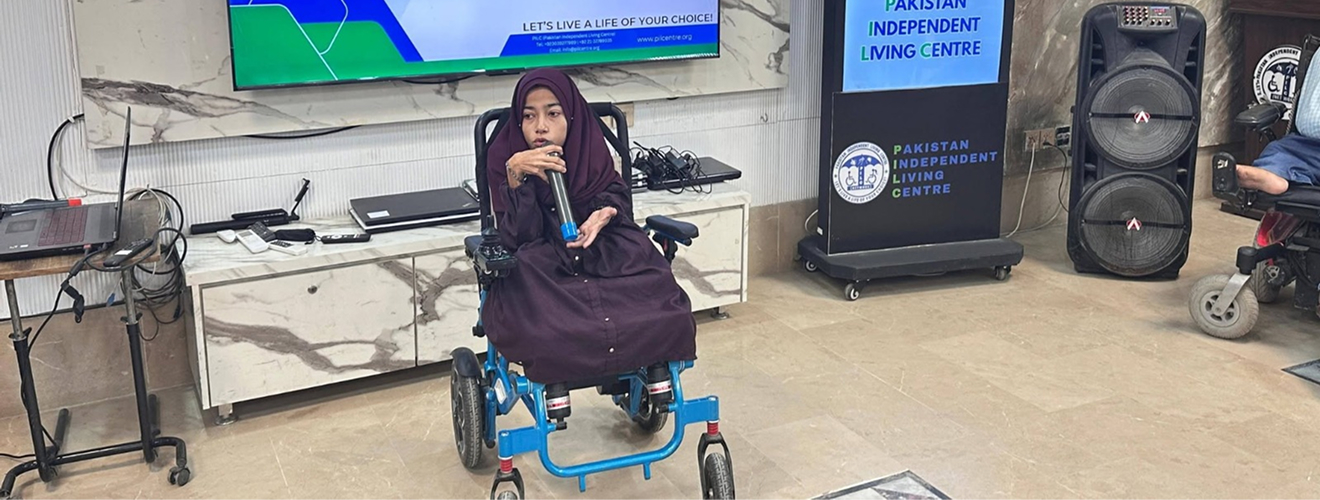
We support the establishment and expansion of Independent Living Centres (ILCs) across Sindh. These centers are not institutions. They are community-based hubs that provide the practical information, services, peer support, and connections that persons with disabilities need to live independently and participate fully in society.
ILCs are guided by the independent living philosophy and focus on empowerment, practical support, and inclusive community living. The Pakistan Independent Living Network (PILN) and Independent Living Centres across Pakistan foster supportive and inclusive environments that promote social interaction and community participation while challenging barriers and misconceptions about disability.
Many persons with disabilities need assistance with daily activities. That support should never come at the cost of their freedom or autonomy. We advocate for personal assistance services that enable persons with disabilities to live in their own homes, with the support they need, when they need it.
We also work to ensure that home-based services are available to persons with significant support needs. In one court case, three children with disabilities who were bedridden required physiotherapy at home. The court directed the health department to arrange for a qualified physiotherapist and nurse to visit their residence.
We advocate for such services to be available to everyone who needs them—not only to those who are able to take their case to court.
Independent living is not only about physical support. It is also about emotional, social, and peer support. We promote peer counselling programs in which persons with disabilities support and learn from one another. Peer support can strengthen self-esteem, confidence, decision-making, and emotional well-being while reinforcing community inclusion through shared experiences.
We also organize community outreach activities, including social events, dining, picnics, and leisure trips. These activities create opportunities for community participation while building confidence, relationships, and connections.
Institutions are not the answer. Communities are.
We advocate for the deinstitutionalization of persons with disabilities and their transition to community-based living, with the support they need to live safely and independently. We work to ensure that Sindh develops a clear pathway for supporting people to move from institutions into their families and communities.
We advocate for community-based housing options, rather than segregated facilities. The right to live “independently or within the community” means having access to accessible housing and appropriate support, not simply replacing one institution with another form of segregation.
Financial independence is a cornerstone of independent living.
We work to ensure that persons with disabilities have access to employment, skills development, entrepreneurship, and income-generating opportunities so they can support themselves and, where appropriate, their families. Economic empowerment gives people greater choice and control over their lives and strengthens their ability to live independently within their communities.
“Independent living is not about doing everything alone; it is about having the freedom to make your own choices.”
The independent living philosophy is about choice, control, dignity, and equal participation. It stands for disability rights, fair access, and respectful treatment across all areas of community life. We believe that persons with disabilities are the experts on their own lives.
Our role is not to decide for them. Our role is to help create the systems, services, and support they need to decide for themselves.