Nullam dignissim, ante scelerisque the is euismod fermentum odio sem semper the is erat, a feugiat leo urna eget eros. Duis Aenean a imperdiet risus.
Loading
Nullam dignissim, ante scelerisque the is euismod fermentum odio sem semper the is erat, a feugiat leo urna eget eros. Duis Aenean a imperdiet risus.
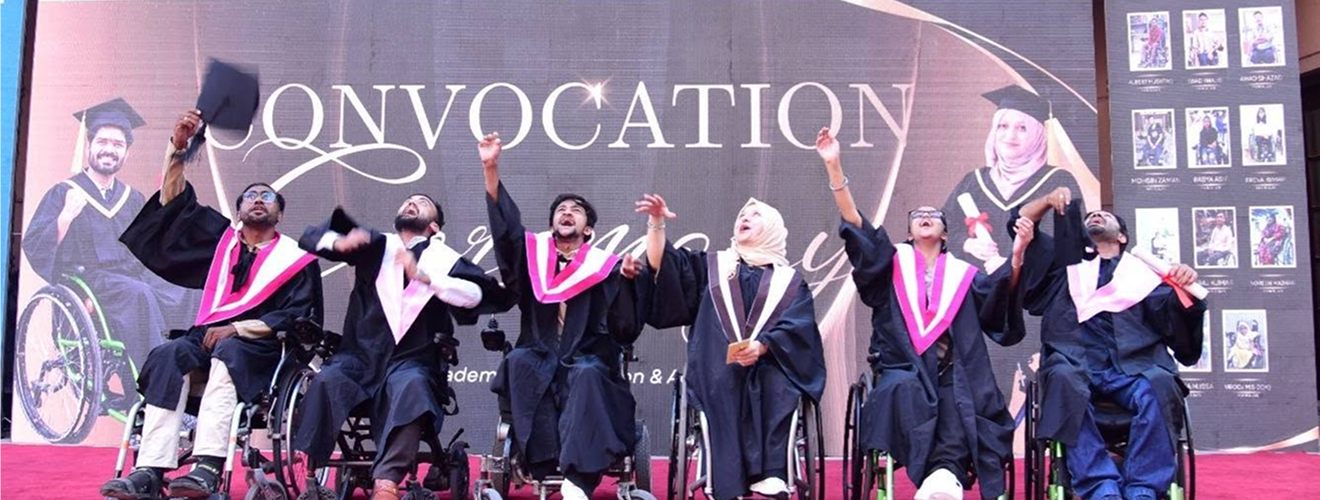
Education is the foundation of opportunity. Yet for children with disabilities in Sindh, that foundation is either crumbling or has never existed at all.
The numbers are staggering. According to UNICEF, an estimated 96% of children with disabilities in Pakistan are out of school. Sindh bears a large proportion of this burden due to poverty, gender disparities, and limited accessibility. Overall, Sindh has 7.4 million out-of-school children, and disability acts as a major compounding barrier to school attendance.
But this crisis is not just about numbers. It is about systemic exclusion. Children with disabilities are often invisible in our education system. They are denied admission to mainstream schools. Teachers lack the training to support them. Schools lack ramps, accessible washrooms, and appropriate learning materials. In rural areas, the journey to school can be dangerous or impossible. The 2022 floods destroyed thousands of schools, further pushing children with disabilities out of education.
Children with mild autism, slow learners, and those with borderline cognitive abilities are routinely denied admission to mainstream public and private schools and directed towards special education institutions. This segregation not only limits their access to quality education but also deprives them of social inclusion and the opportunity to reach their full potential.
The gender dimension is critical. Girls with disabilities face double discrimination. In many districts, the majority of schools are for boys only. For example, in one district, out of 1,199 schools, only 192 are for girls. A girl with a disability in rural Sindh can face almost insurmountable barriers to education.
The data problem compounds the crisis. While the national census identifies only 3% of the population as having disabilities, estimates from the World Bank and independent organizations suggest the figure is closer to 12%. Without accurate data, we cannot plan, budget, or reach the children who need us most.
The Sindh Empowerment of Persons with Disabilities Act, 2018, guarantees the right to inclusive education at all levels in public and private institutions. Section 9, “Equity in Education,” provides for inclusive education and establishes the Directorate of Inclusive Education. The law is clear. Implementation is not.
To ensure that every child with a disability in Sindh has access to quality, inclusive education in mainstream schools close to home, alongside their peers, and with the support they need to thrive.
The law exists. We work to ensure it is enforced. We advocate for the full implementation of the Sindh Empowerment of Persons with Disabilities Act, 2018, particularly its provisions on inclusive education. We hold government and private schools accountable for admitting children with disabilities and providing them with equal opportunities.
We support the work of the Directorate of Inclusive Education under the Department of Empowerment of Persons with Disabilities (DEPD). The Directorate was created to address the denial of admission to children with mild autism and similar conditions in mainstream schools. We also support large-scale teacher training initiatives. The Sindh Government has partnered with the Aga Khan University's Institute for Educational Development (AKU-IED) through a landmark five-year, Rs. 439 million partnership to build a province-wide inclusive education system.
We advocate for universal design standards in all new school construction and the retrofitting of existing schools. This includes ramps, wide doorways, accessible washrooms, tactile pathways, and signage in multiple formats. We work with the Access Audit Task Force to assess and improve the accessibility of schools across Sindh.
Different children need different kinds of support. We advocate for specialized services within mainstream schools for children with different disabilities, including Down syndrome, autism, visual disabilities, hearing disabilities, and intellectual disabilities. Approximately 80,000 to 100,000 children in Sindh are affected by Down syndrome approximately one in every 700 children. We work to ensure that these children have access to inclusive education, supported by trained teachers, therapists, and appropriate learning materials.
Attitudes are often the biggest barrier. Many parents, teachers, and community members believe that children with disabilities cannot learn or do not belong in mainstream schools. We run public education campaigns to change these mindsets. We produce multimedia resources, toolkits, and community sensitization initiatives that challenge stigma and recognize the potential of every child with a disability.
We also support parents and families. Families of children with disabilities often face isolation, stigma, and a lack of information. We connect them with support networks, legal advice, and educational resources.
For many children with disabilities, getting to school can be as difficult as learning once they arrive. We advocate for safe, affordable, and accessible transport for children with disabilities. Organizations such as NOWPDP already operate more than 50 vehicles, transporting approximately 550 children with disabilities to and from schools across Sindh. We work to expand such initiatives and ensure that transport is safe, affordable, and accessible.