Nullam dignissim, ante scelerisque the is euismod fermentum odio sem semper the is erat, a feugiat leo urna eget eros. Duis Aenean a imperdiet risus.
Loading
Nullam dignissim, ante scelerisque the is euismod fermentum odio sem semper the is erat, a feugiat leo urna eget eros. Duis Aenean a imperdiet risus.
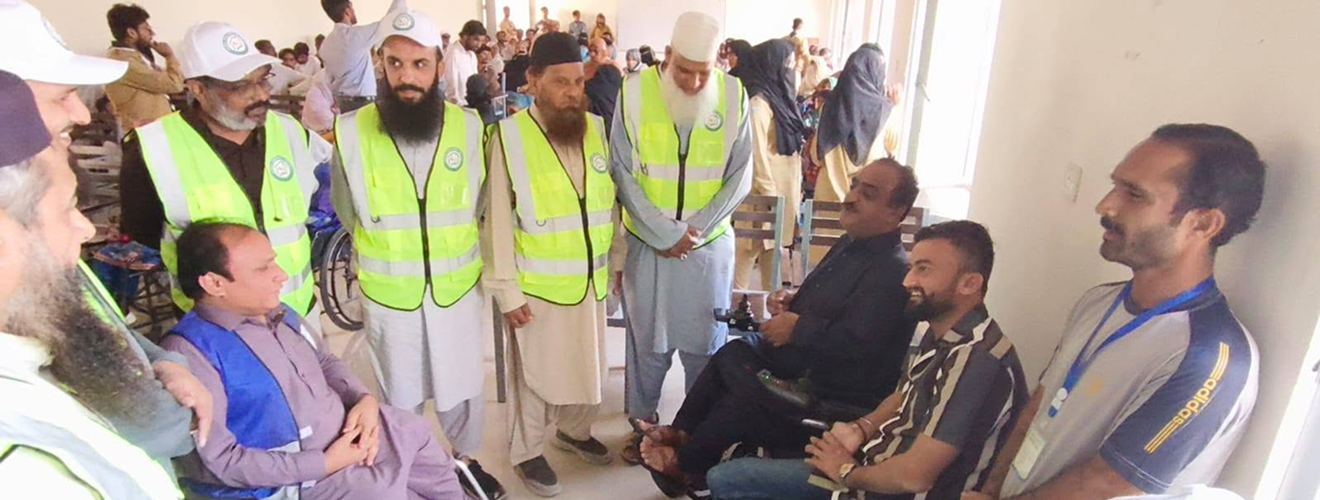
Sindh is on the front line of the climate crisis. Pakistan ranks among the world's most vulnerable countries to climate change, although it contributes less than 1% of global carbon emissions. For persons with disabilities, every flood, heatwave, and drought brings not just destruction but systematic exclusion.
The 2022 floods were a wake-up call. Unprecedented monsoon rains submerged one-third of Pakistan, affecting 24 districts in Sindh. The cost of losses and damages exceeded $20.44 billion. More than 2 million houses were damaged or destroyed. More than 23,900 schools and 1,460 health facilities were damaged. Approximately 7.9 million people were displaced.
The human cost was staggering. More than 115,000 individuals among the flood-affected population were persons with disabilities, including nearly 50,000 children and more than 26,000 women. In eight flood-affected districts of Sindh, more than 110,000 persons with disabilities, including 37,348 children and 39,677 women, continue to suffer the consequences.
The Sindh Human Rights Commission (SHRC) found that “the evacuation and relief processes didn't provide attention to the vulnerable segments of the communities, like persons with disabilities, lactating mothers, pregnant women, and elderly persons.” Older people and persons with disabilities encountered severe barriers in accessing evacuation routes and mobile health units, highlighting a critical gap in inclusive disaster planning.
The result is a cycle of vulnerability. Before the floods, disability was already a barrier to accessing basic healthcare and employment. Floods expose existing social inequalities and further exacerbate barriers to essential services for persons with disabilities, their carers, and older people.
To ensure that every person with a disability in Sindh is protected, included, and empowered at all stages of disaster management, especially preparedness, response, recovery, and reconstruction.
We believe that humanitarian action is not just about saving lives; it is about saving lives with dignity. Our mission is to transform humanitarian systems so that persons with disabilities are never again left behind in a crisis.
We work to ensure that disaster preparedness reaches everyone, including persons with disabilities.
We advocate for inclusive early warning systems that deliver alerts in multiple accessible formats. Pakistan's National Disaster Management Authority (NDMA) has launched multi-format alerts, including sign language, audio, visual, and easy-to-read formats, to improve preparedness for persons with disabilities. We support the scale-up of such initiatives across Sindh.
We also work with an organization developing AI-powered sign language alert systems that deliver life-saving emergency information during natural disasters and humanitarian crises. More than 1.35 million people in Pakistan live with disabling hearing loss. They must not be left without access to critical warnings.
We train community-based disaster management committees and village reconstruction committees to include persons with disabilities in their planning. We ensure that evacuation plans account for persons with mobility, visual, hearing, and intellectual disabilities.
When disaster strikes, persons with disabilities must be prioritized, not forgotten.
We advocate for door-to-door relief services for persons with disabilities who cannot reach distribution points. We work with the Provincial Disaster Management Authority (PDMA) to ensure that persons with disabilities, pregnant women, lactating mothers, vulnerable children, and senior citizens are identified as priority groups in all relief and rescue efforts.
We ensure that relief supplies meet the specific needs of persons with disabilities, including wheelchairs, assistive devices, food packages, hygiene kits, and milk supplements. We advocate for accessible relief camps with ramps, accessible washrooms, and sign language interpretation.
We support cash grants and multipurpose cash assistance for flood-affected persons with disabilities, enabling them to meet their own needs with dignity.
We advocate for accessible housing in reconstruction efforts. Across Sindh, more than 111,000 persons with disabilities are receiving accessible homes through government programs. We work to ensure that this reaches every district. We promote universal design standards in all new construction, including ramps, wide doorways, accessible washrooms, and tactile paving.
We advocate for the reconstruction of accessible schools and health facilities. The 2022 floods damaged 35% of girls' schools, and only half have been repaired. We work to ensure that rebuilt schools are accessible to children with disabilities.
We support livelihood recovery for persons with disabilities who lost their means of income. We connect them to employment schemes, microloans, vocational training, and other livelihood opportunities.
We support disability-disaggregated data collection in all humanitarian assessments. We work with government and humanitarian actors to identify persons with disabilities in disaster-affected areas so that they can be reached with appropriate services and support.
We conduct rapid needs assessments to identify persons with disabilities in flood-affected areas and understand their specific needs.
We use evidence to advocate for inclusive humanitarian policies. The SHRC has recommended that “special attention is needed for the vulnerable people like children, the elderly, women, and sick people as well as those with disabilities.” We work to ensure that these recommendations are implemented.
We advocate for the activation of District Disaster Management Authorities (DDMAs) across all districts of Sindh. We push for the formation of special committees to monitor relief and rehabilitation work, with representation from persons with disabilities.
We advocate for the National Policy Guidelines on Vulnerable Groups in Disasters (2025) to be fully implemented in Sindh. These guidelines ensure that disaster management protects, includes, and empowers the most vulnerable segments of society at all stages of a disaster.
Humanitarian action must reach everyone. Persons with disabilities are not a special interest group. They are a significant part of every community. According to the World Bank, approximately 15% of the world's population experiences some form of disability. In Pakistan, about one in five (19%) household members over 5 years old experience difficulties in one or more functional domains.
Humanitarian action that excludes persons with disabilities is humanitarian action that fails.