Nullam dignissim, ante scelerisque the is euismod fermentum odio sem semper the is erat, a feugiat leo urna eget eros. Duis Aenean a imperdiet risus.
Loading
Nullam dignissim, ante scelerisque the is euismod fermentum odio sem semper the is erat, a feugiat leo urna eget eros. Duis Aenean a imperdiet risus.
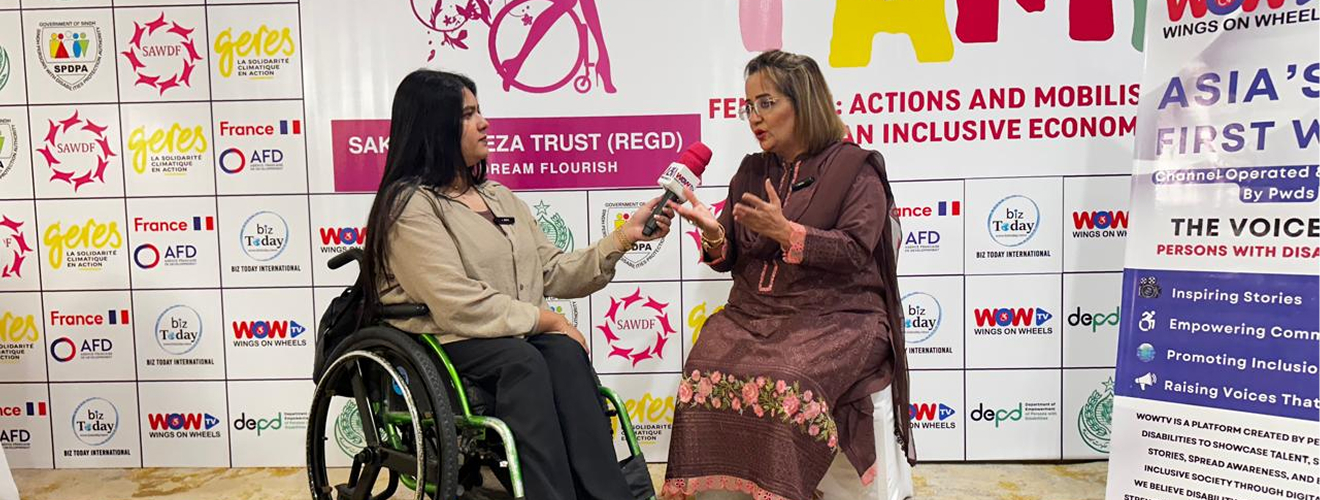
In Sindh, women and girls with disabilities face multiple layers of discrimination. They are overlooked because of their gender in a patriarchal society. They face discrimination because of disability. Harmful cultural norms, often expressed in the name of “Ghairat,” further restrict their choices and freedom. Misinterpretations of religion can also reinforce the perception that disability is a burden.
The result is devastating:
To ensure that every girl and woman with a disability in Sindh lives a life of dignity, safety, and choice. We work to break the cycle of isolation and empower women and girls with disabilities to become leaders in their families, communities, and the broader movement for inclusion.
We establish safe and accessible reporting mechanisms for gender-based violence. We work closely with the Women's Development Department and the Legal Aid Task Force to ensure that complaints are taken seriously and survivors can access appropriate support. We also create support groups where survivors can find solidarity, peer support, and healing.
We advocate for accessible gynecological and maternal health services across Sindh. Our Task Force conducts health camps specifically for women with disabilities in rural areas. We also train female health workers to better identify, communicate with, and support women with disabilities.
We run mentorship programs that connect younger girls with successful women with disabilities who can serve as role models and mentors. Our literacy classes and vocational training are designed around the needs and circumstances of women and girls with disabilities. We also advocate for school enrollment in collaboration with the Inclusive Education Task Force.
We train women with disabilities to speak at community meetings, participate in local government councils, and lead CBID initiatives. We are committed to ensuring that at least 50% of leadership positions within the CBID Network are held by women with disabilities.
We connect women with disabilities to micro-loans, sewing machines, poultry farming, and other income-generation opportunities. Our goal is to reduce dependency on family members and strengthen the financial autonomy and decision-making power of women with disabilities.
We conduct community dialogues in villages and urban settlements to challenge harmful attitudes and stigma. We engage religious leaders, husbands, and mothers-in-law to address misconceptions, challenge stigma, and shift attitudes towards women and girls with disabilities.
This Task Force is led by women with disabilities.
They are not simply beneficiaries. They are independent decision-makers, trainers, advocates, and leaders. We believe that the best solutions come from people who have lived the experience. Their knowledge, leadership, and participation are central to everything we do. We partner with women's rights organizations to ensure that disability inclusion is integrated into their programs.
Our goal is simple: women and girls with disabilities must not be treated as passive recipients of services. They must be recognized as rights-holders, decision-makers, and leaders in their own lives and communities.