Nullam dignissim, ante scelerisque the is euismod fermentum odio sem semper the is erat, a feugiat leo urna eget eros. Duis Aenean a imperdiet risus.
Loading
Nullam dignissim, ante scelerisque the is euismod fermentum odio sem semper the is erat, a feugiat leo urna eget eros. Duis Aenean a imperdiet risus.
Sindh is a province of extraordinary beauty and history. From the ancient ruins of Mohenjo-Daro, representing one of the world's oldest civilizations, to the majestic Ranikot Fort, often called the “Great Wall of Sindh”; from the serene Keenjhar Lake to the breathtaking Gorakh Hill Station, our land is rich with cultural and natural treasures. Sindhi culture, traditional food, and the seaside attractions of Karachi and Manora also attract visitors from across Pakistan and beyond.
Yet, for millions of persons with disabilities in Sindh, these treasures remain out of reach. The reality is stark. In Karachi, Pakistan's largest city, many roads have inaccessible pedestrian pavements that create barriers for wheelchair users and persons who use white canes. Public buildings, transport systems, and tourist sites often lack support rails, ramps, or lifts to facilitate access for persons with disabilities. Public buses also lack adequate designated seating and accessibility features. Even when ramps exist, they are often poorly designed or serve only as a token gesture.
Consider this: a visitor to a museum in Karachi recently noted that there was no accessible ramp at the entrance. At Kot Diji Fort, experts have identified “insufficient infrastructure, lack of awareness, limited accessibility, and the need for better amenities for visitors” as major challenges. A study found that 50% of surveyed participants were persons with physical disabilities, of whom 30% had some form of visual impairment. Of the persons with disabilities surveyed, 17% reported visiting tourist sites in those districts for the first time, a clear indication that many people with disabilities are being excluded from experiencing their own heritage.
Yet the potential is immense. Pakistan has enormous tourism potential. By creating a more accessible and welcoming environment, we can attract more tourists and contribute significantly to economic development. Accessible tourism is not just about ramps. It is about dignity, inclusion, participation, and economic opportunity.
To make every tourist destination in Sindh accessible to persons with all types of disabilities and to position Sindh as a leader in accessible tourism in Pakistan.
We believe that tourism should be accessible to everyone, not a privilege limited by disability. Every person, regardless of disability, deserves to experience the beauty, history, and culture of their homeland. Our mission is to break down the physical, attitudinal, and informational barriers that prevent persons with disabilities from traveling, exploring, and enjoying Sindh's rich heritage.
Through our Access Audit Task Force, we conduct comprehensive accessibility audits of major tourist destinations across Sindh, including Mohenjo-Daro, Ranikot Fort, Keenjhar Lake, Gorakh Hill, Shah Jahan Mosque in Thatta, the Sindh Museum in Hyderabad, and the Chaukhandi Tombs. We assess physical infrastructure, transportation access, signage, communication systems, and visitor facilities.
We advocate with the Sindh Government, the Culture and Tourism Department, and the Sindh Tourism Development Corporation (STDC) to ensure that all new tourism infrastructure follows universal design principles and that existing sites are progressively made accessible. This includes ramps, accessible washrooms, tactile pathways for persons with visual disabilities, sign language interpretation, and accessible information displays.
We train tourism professionals, hotel staff, restaurant workers, and transport operators in disability etiquette and inclusive service. We create accessible tourism guides and maps that clearly identify which sites are wheelchair accessible, which provide sign language interpretation, and which offer sensory-friendly experiences for persons with autism or intellectual disabilities.
We work with public and private transport providers to make travel accessible. This includes advocating for wheelchair-accessible buses, trains with designated accessible seating and ramp facilities, and accessible airport services. Pakistan Railways has already introduced a 50% fare discount for persons with disabilities. We aim to promote and expand such accessibility initiatives across all modes of transport.
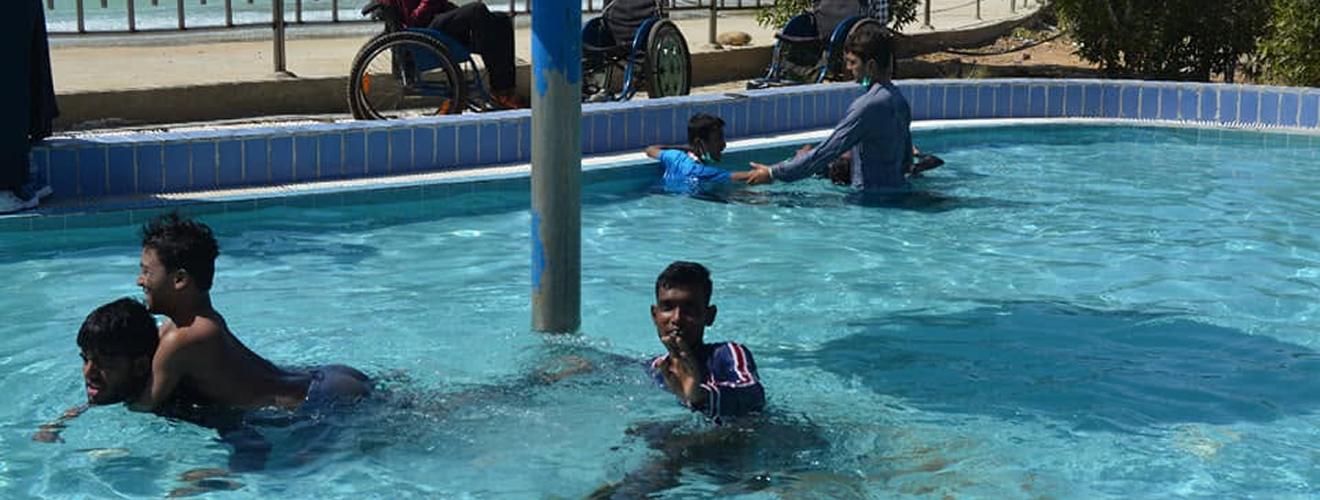
We organize and support inclusive tourism events. In 2024, the Sindh Tourism Development Corporation organized a field trip to the STDC Keenjhar Lake Resort for 80 children with disabilities from Dar-ul-Sukun. We aim to scale up such initiatives and create regular opportunities for persons with disabilities to experience and enjoy the beauty of Sindh.
We run campaigns to change societal attitudes. Many barriers are not physical; they are attitudinal. People with disabilities are often discouraged from traveling because of stigma or because they are told, “This place is not for you.” We challenge these narratives and recognize persons with disabilities as valuable tourists, travelers, and ambassadors of Sindh.
We ensure that tourism information provided through websites, mobile apps, and booking platforms is accessible to persons with visual, hearing, and cognitive disabilities. This includes screen-reader compatibility, sign language videos, captions, and simplified language options.
There is growing political will in Sindh. The Chief Minister has announced that his government will make public places and transport more accessible. The government has also approved the “Inclusive City” project, a 75-acre community designed as Pakistan's first inclusive community model for people with disabilities. This project has the potential to serve as a model of accessibility, inclusion, and empowerment.